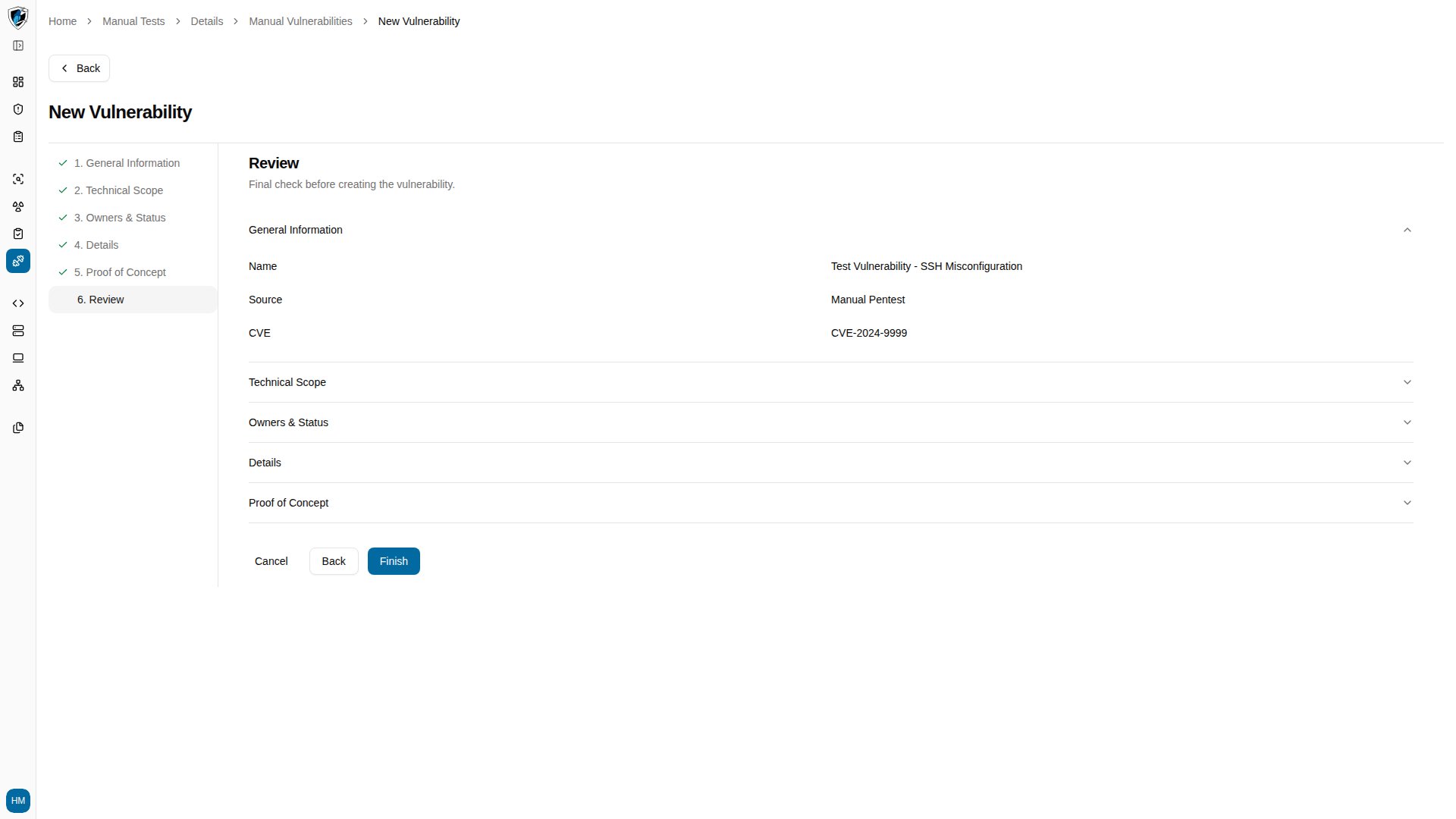

Step 1: General information
Open the Manual Vulnerabilities tab inside a manual test and click Create, then describe the finding:- Name (required) — the title of the vulnerability. Clicking Next with it empty returns
Name is required. - Category — the security test category, such as Manual Pentest.
- CVE — the CVE identifier, such as CVE-2024-9999.
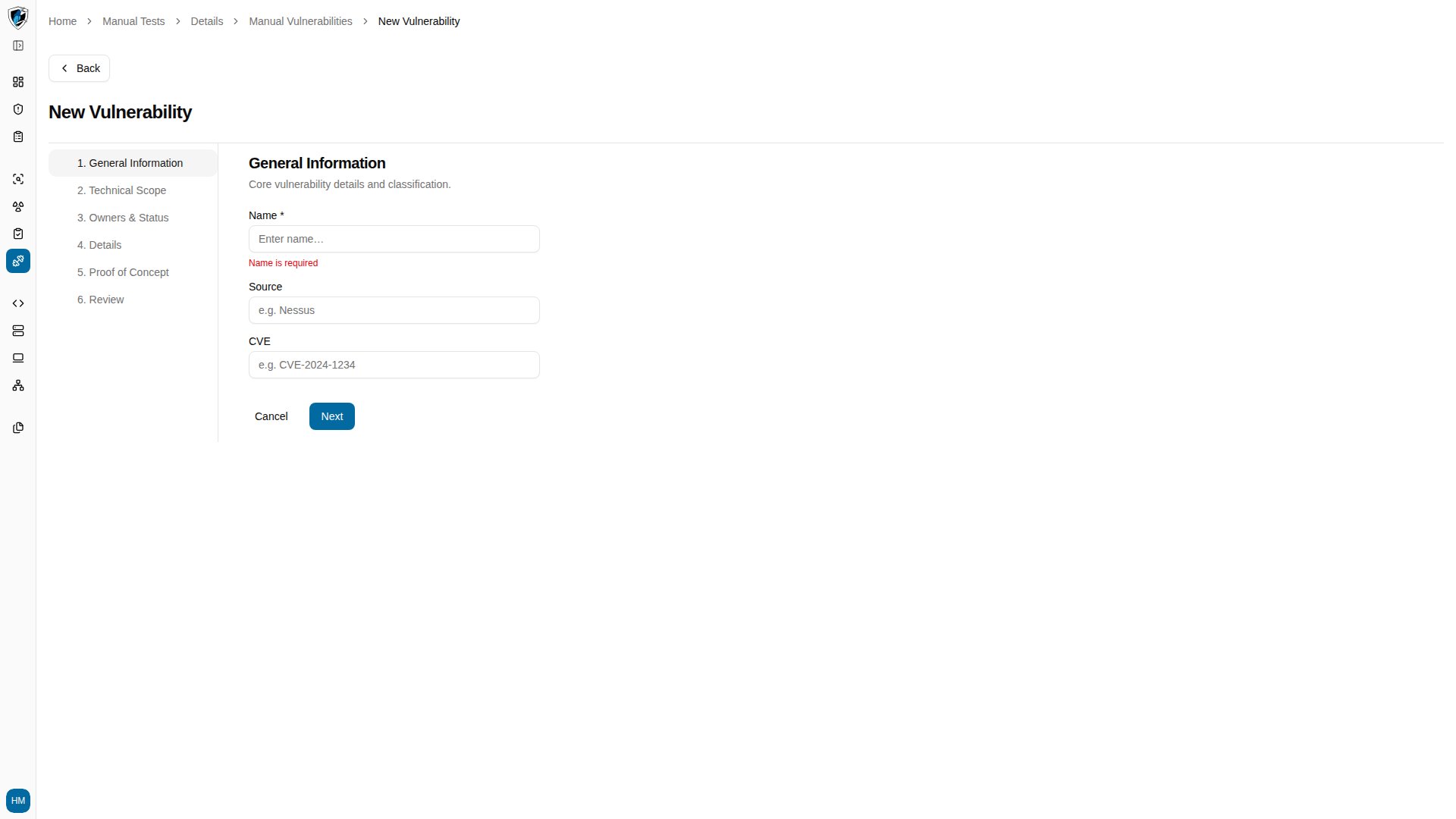
Step 2: Technical scope
Click Next, then select the assets, web applications, or endpoints the finding affects.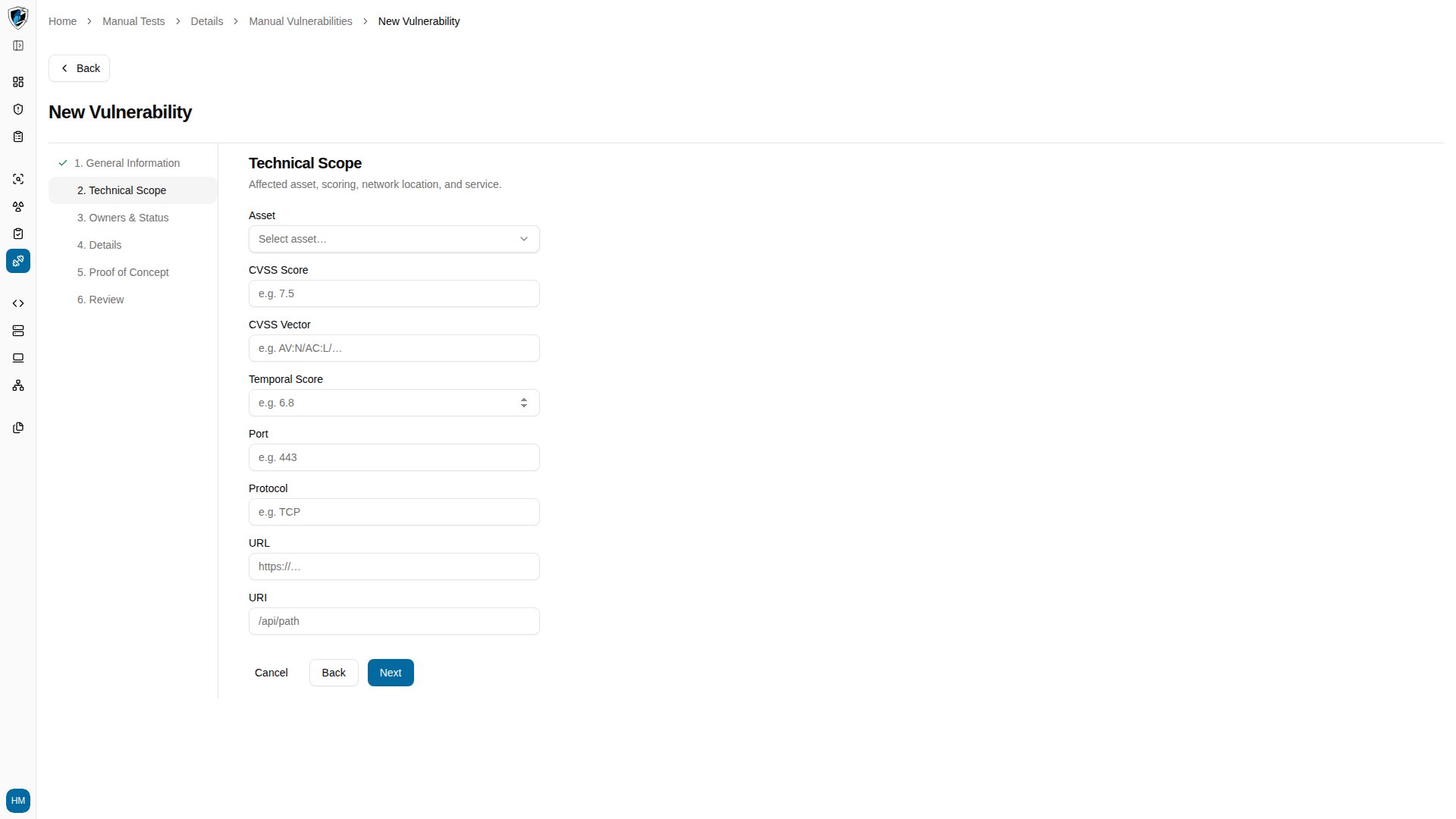
Step 3: Owners and status
Assign responsibility and set the workflow status:- Impact — severity level for the finding.
- Status — its initial lifecycle status, such as Open.
- Risk Owner (required) — select an owner from the dropdown. Clicking Next without one returns
Risk Owner is required. - Remediation Owner — the person assigned to fix it.
- Time to Resolve — a target resolution date.
Step 4: Details
Configure CVSS scores, severity, the vector string, and impact descriptions.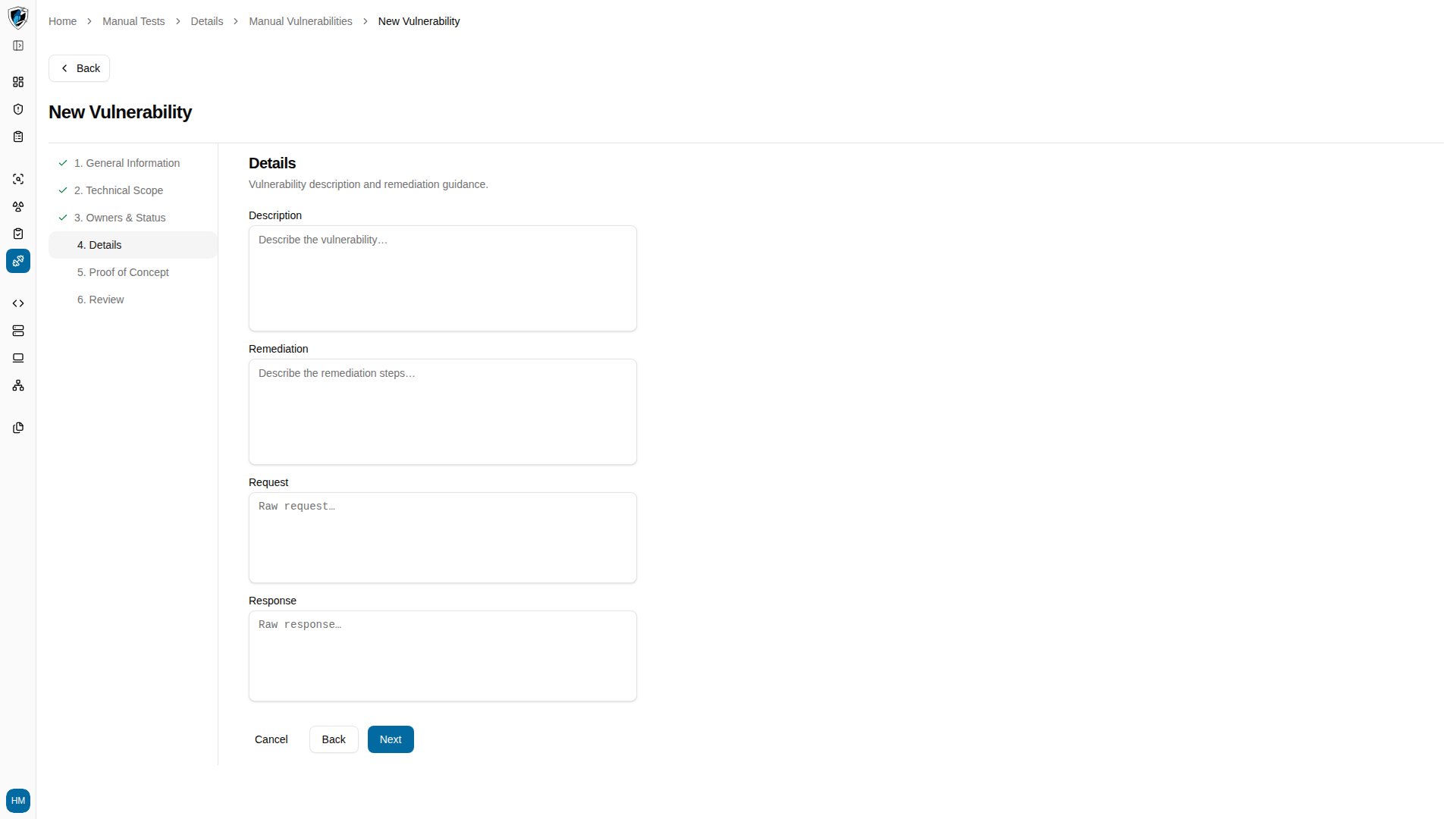
Step 5: Proof of concept
Use the rich-text editor to document reproduction steps, HTTP requests and responses, and supporting evidence.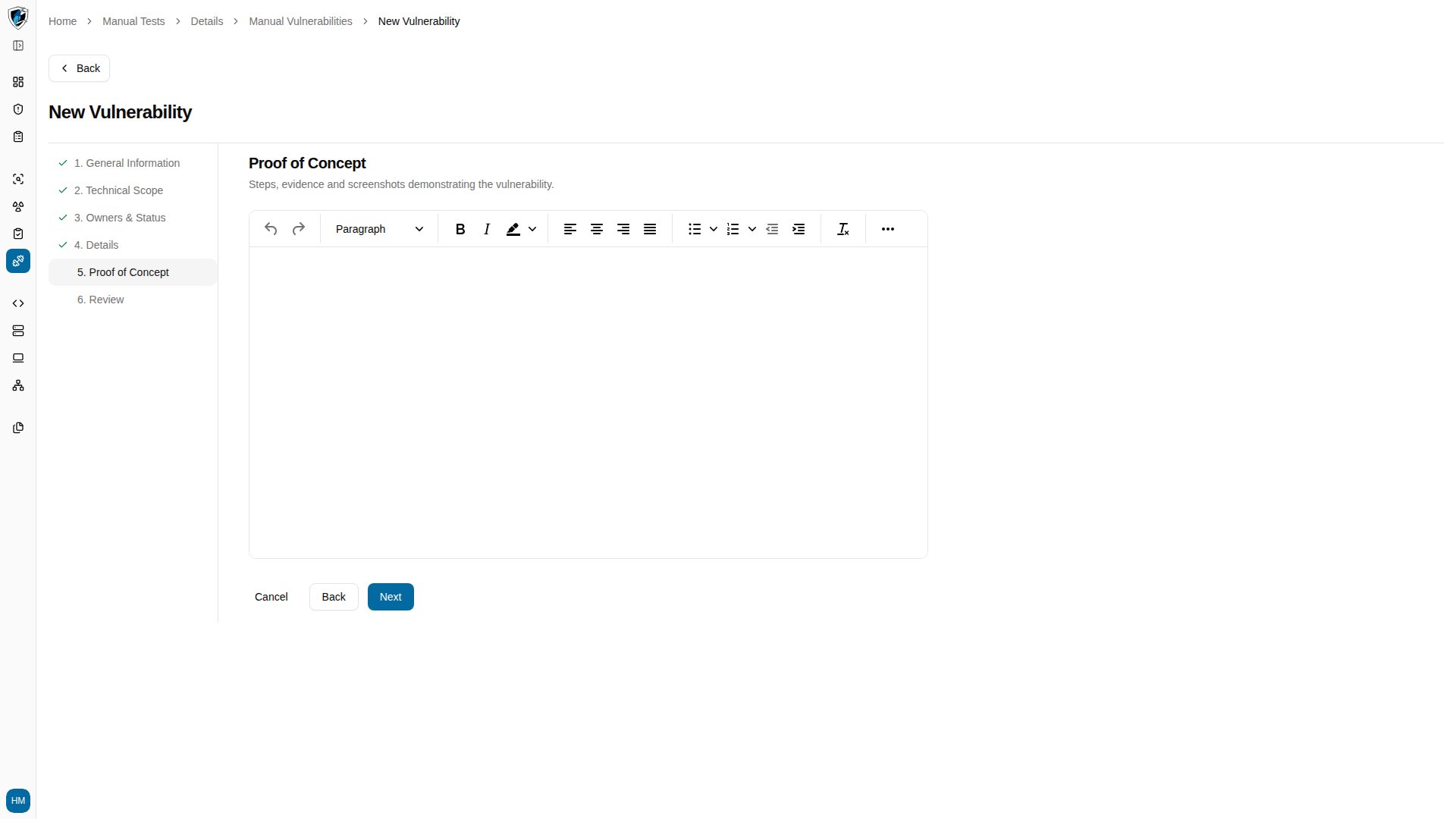
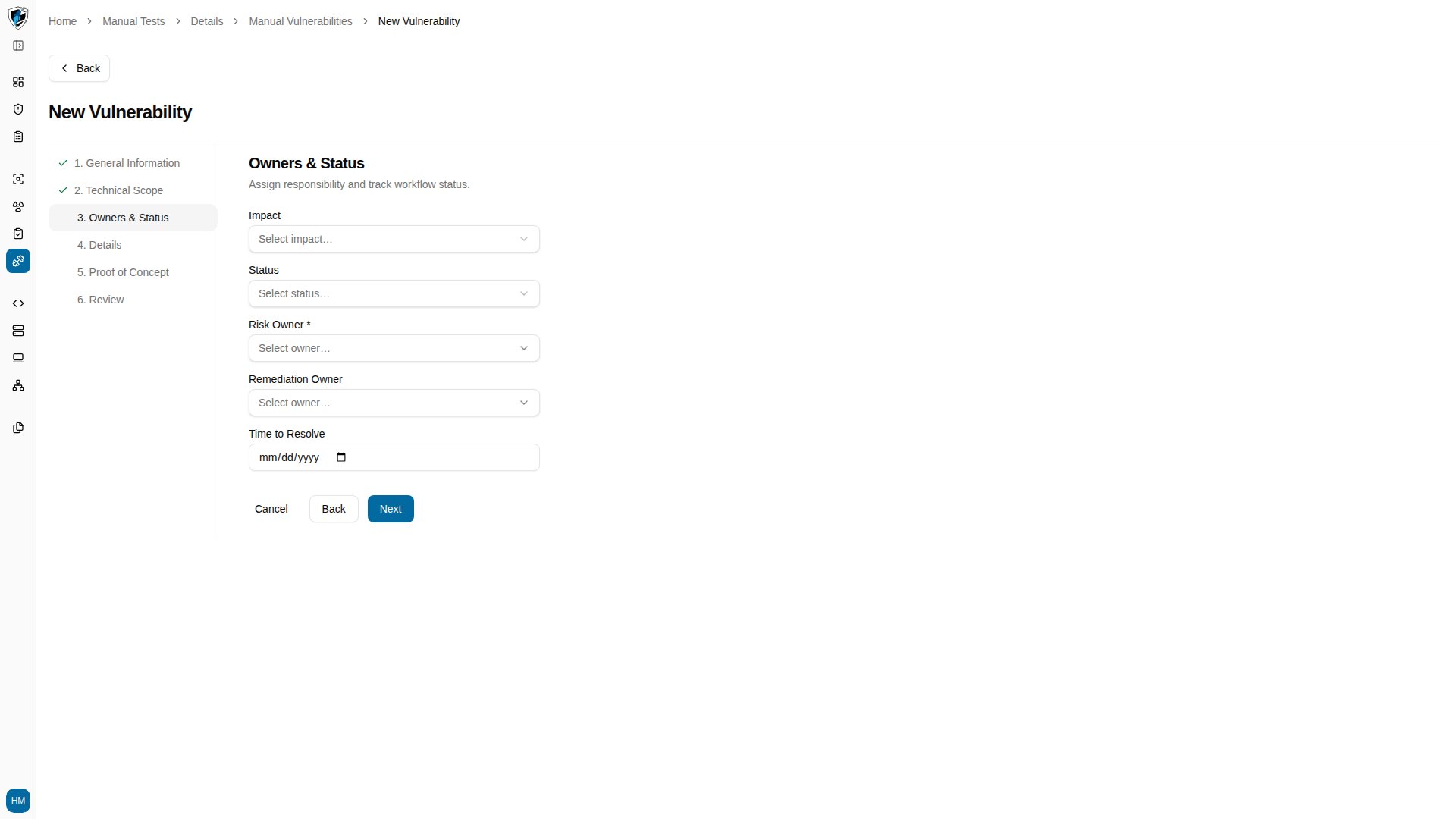
Step 6: Review
Check the summary and click Finish. You return to the Manual Vulnerabilities tab of the test you started from.